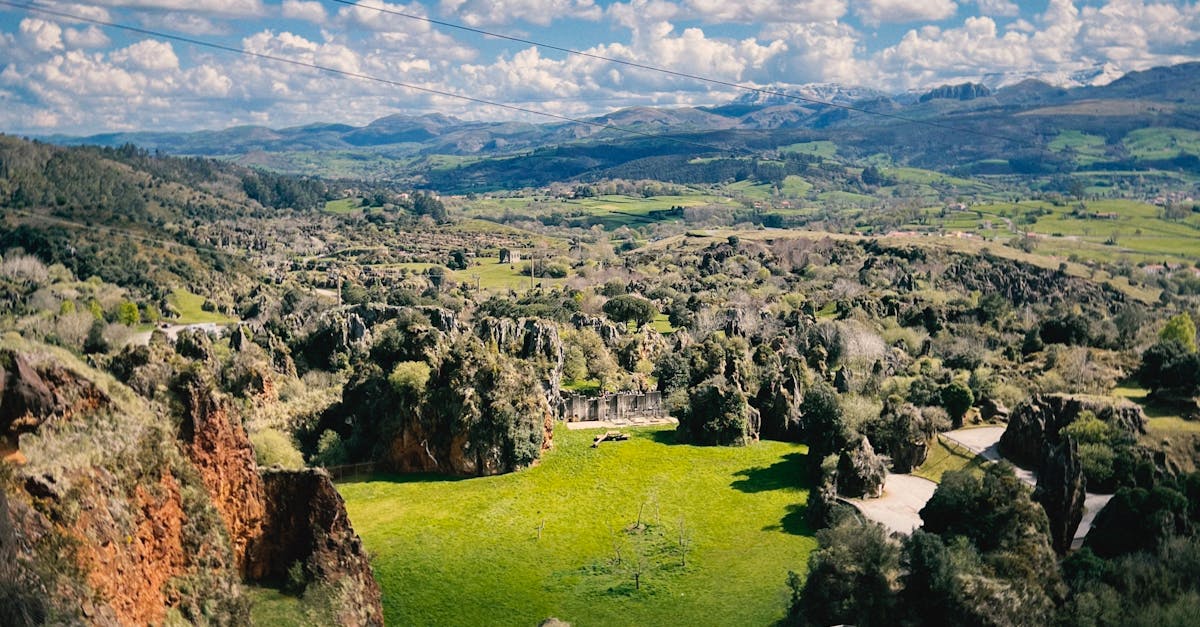
In the Autonomous Community of Cantabria, in northern Spain, there is an impressive karst landscape that was exploited for centuries due to its rich iron resources. This terrain, characterized by rugged rock formations, sinkholes, and limestone pavements, is the result of both natural geological processes and intense human mining activity.
As early as Antiquity, Greek and Roman geographers highlighted the mineral wealth of this area. The Romans were the first to open an open-pit mine here, taking advantage of the high-quality iron. During the Middle Ages and especially the Industrial Revolution, mining activity increased significantly, radically transforming the original landscape and turning the area into an important extraction center. This activity continued until the late 20th century, leaving behind a heavily altered environment.
After the mine was finally abandoned in 1989, the need arose to give new use to this degraded space. Instead of leaving it unused, an innovative environmental restoration project was developed: the creation of the Cabárceno Nature Park. This park is not a conventional zoo, but a space where animals live in large enclosures in semi-freedom, making it a pioneering model in Europe.
Today, the park stands out not only for its ecological value, but also for its unique landscape, where the traces of former mining blend with vegetation and wildlife. It hosts species from all five continents—many of them endangered—and participates in conservation, research, and environmental education programs. Moreover, visitors can enjoy a unique experience by observing animals in wide, natural spaces, far from traditional cages.
Among the available activities, the cable car ride is particularly noteworthy, allowing visitors to view the park from above and appreciate the scale of its rocky formations. There are also marked routes that can be explored by car, bicycle, or on foot, following old mining paths that have been adapted for sustainable tourism.
Most importantly, the closure of the mine did not lead to economic decline in the area. On the contrary, the development of the park created jobs, boosted tourism, and revitalized the municipality, demonstrating that it is possible to transform a degraded space into a valuable resource. Cabárceno has thus become a clear example of sustainable development, where environmental recovery goes hand in hand with economic and social progress.
An inspiring model that could be applied in many other regions of the world.
👉 Cabárceno Nature Park website.